
E-Commerce in Bangladesh: Growth, Opportunities, and Future

Introduction
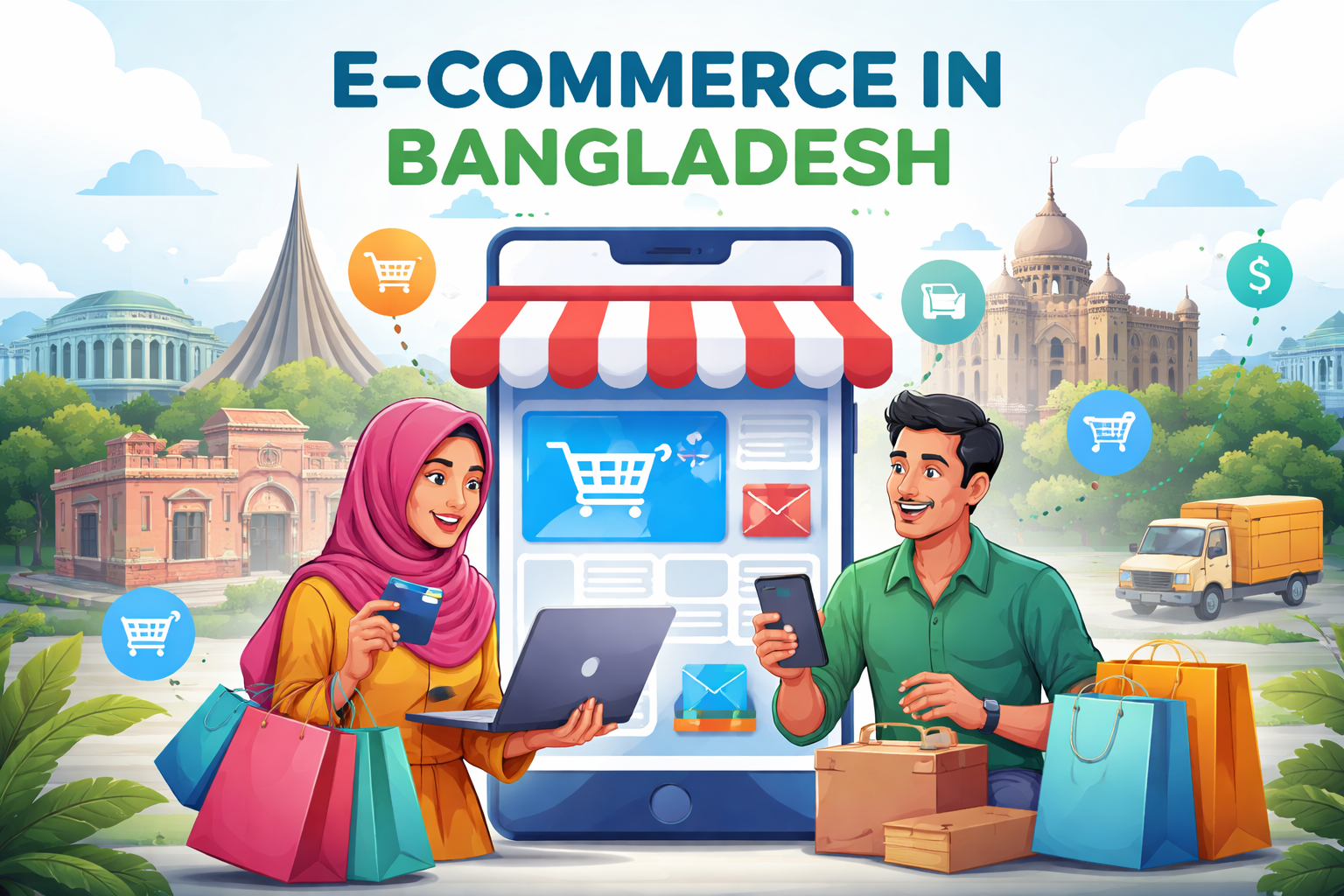
E-commerce has transformed the way people buy and sell products around the world, and Bangladesh is no exception. Over the past decade, the country has witnessed rapid growth in online shopping, driven by increased internet access, smartphone usage, and digital payment systems. Today, e-commerce plays an important role in Bangladesh’s economy, creating new business opportunities and changing consumer behavior.
The Rise of E-Commerce in Bangladesh
The journey of e-commerce in Bangladesh began in the early 2000s, but it gained real momentum after 2015. With the expansion of 4G internet, affordable smartphones, and social media platforms like Facebook, online businesses started growing quickly. The COVID-19 pandemic further accelerated this growth, as people turned to online shopping for safety and convenience.
According to industry observations, millions of Bangladeshis now shop online regularly, especially in urban areas such as Dhaka, Chattogram, and Sylhet.
Popular E-Commerce Platforms
Bangladesh has both marketplace-based and social-commerce platforms. Some of the most popular ones include:
- Daraz – The largest e-commerce marketplace in Bangladesh
- Chaldal – Focused on online grocery delivery
- Pickaboo – Known for electronics and gadgets
- Rokomari – Specializes in books and educational products
- AjkerDeal – One of the early local e-commerce platforms
In addition to websites and apps, Facebook-based businesses play a major role. Many small entrepreneurs sell clothing, cosmetics, and handmade products through Facebook pages and groups.
Digital Payment Systems
Digital payment has been a key driver of e-commerce growth in Bangladesh. Mobile Financial Services (MFS) such as:
- bKash
- Nagad
- Rocket
- Upay
have made online transactions easy and secure. Cash on Delivery (COD) is still widely used, especially outside major cities, as many customers prefer paying after receiving the product.
Benefits of E-Commerce in Bangladesh
E-commerce offers several advantages to both consumers and businesses:
For Consumers
- Convenience of shopping from home
- Access to a wide variety of products
- Competitive pricing and discounts
- Easy price comparison
For Businesses
- Lower startup and operating costs
- Ability to reach customers nationwide
- Opportunities for small and home-based entrepreneurs
- Data-driven marketing through social media and ads
Challenges Facing E-Commerce
Despite its growth, e-commerce in Bangladesh faces several challenges:
- Logistics and delivery issues in rural areas
- Lack of trust due to fake products or delayed delivery
- Limited digital literacy among some users
- Cybersecurity and data privacy concerns
Improving customer service, return policies, and delivery infrastructure is essential to overcome these problems.
Government Support and Regulations
The government of Bangladesh has taken initiatives to support the digital economy through programs like Digital Bangladesh and Smart Bangladesh. Policies, payment gateway regulations, and consumer protection laws are being developed to make e-commerce safer and more reliable.
Future of E-Commerce in Bangladesh
The future of e-commerce in Bangladesh looks very promising. With the rollout of faster internet, increasing trust in digital payments, and the growth of local startups, the sector is expected to expand rapidly. Emerging trends include:
- Mobile-first shopping
- AI-based recommendations
- Faster same-day delivery
- Cross-border e-commerce
Young entrepreneurs and tech-savvy consumers will continue to drive innovation in this sector.
Conclusion
E-commerce has become an essential part of Bangladesh’s modern economy. While challenges remain, continuous technological advancement, government support, and consumer awareness are paving the way for sustainable growth. In the coming years, e-commerce will not only make shopping easier but also create jobs, empower small businesses, and contribute significantly to national development.